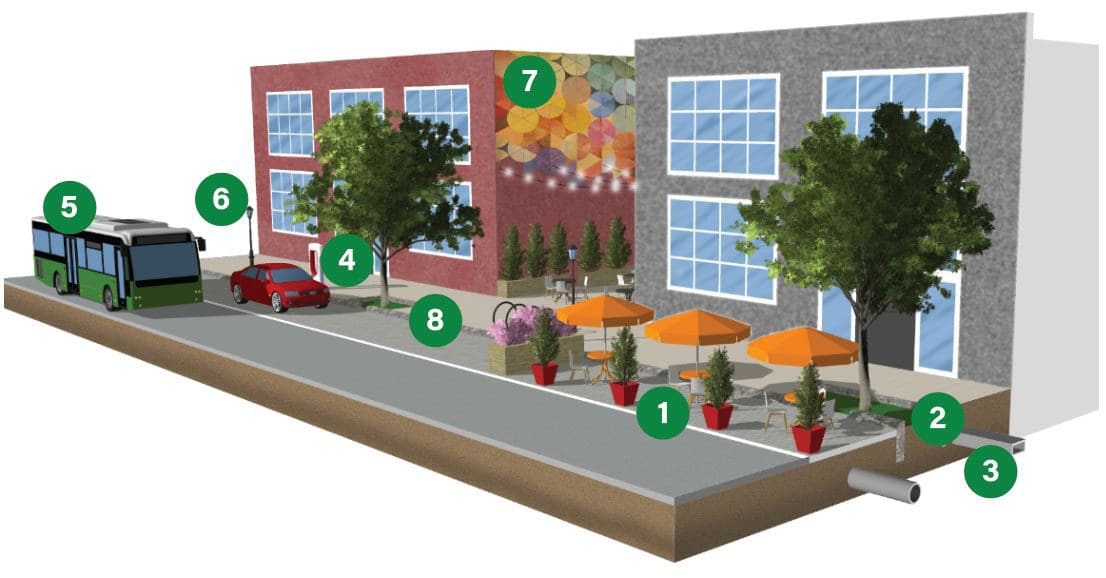
Another area of commonality for Complete Streets and mobility is curb management. In fact, with the influx of Transportation Network Companies like Uber and Lyft and the impending self-driving vehicle age, curb management is, and will continue to be, an essential urban-planning element for Complete Streets communities. It is essential for communities to provide adequate space for drop-offs and pick-ups and traditional deliveries to residents and businesses — all without creating roadway congestion or hazards for pedestrians or people using micromobility transportation. This is already a primary challenge for urban planners and becomes increasingly more critical as self-driving vehicles begin to proliferate.
And speaking of technology, mobile technology is playing an important role in shaping how we manage Complete Streets and mobility. Since the iPhone launched in 2007, smartphones are ubiquitous. It’s estimated that more than 5 billion people—about 2/3 of the world’s population—own at least one mobile phone. Of cell phone users in the United States, 77% own
YET WHERE DO WE GO FROM HERE?
smartphones. We use our smartphones every day, all day long — to shop; to get directions; to keep up with the news; to communicate with family, colleagues, and friends; and complete a dozen other tasks requiring connectivity.
Since connectivity is such an essential part of our day-to-day lives, it makes sense that it would play a vital role in transportation. In fact, mobile technology can connect people to all elements of the parking and mobility experience. It gives people control over their route and transportation via GPS and mapping apps; in cities that introduced parking-guidance networks and other smart-city technology, it can help them find parking quickly and easily; and once the driver arrives at his or her destination, it provides the most convenient payment option. These considerations must be factored into Complete Streets planning.