Written by WGI | Dec 19, 2025, 3:21:58 PM
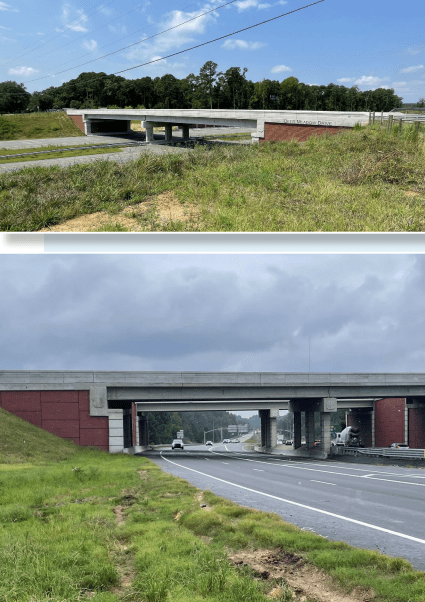
For more than two decades, WGI has been a trusted partner in shaping the future of transportation infrastructure across North Carolina. Since opening our Raleigh office in 2004, our team has successfully delivered a wide range of projects through both conventional and alternative delivery methods for the North Carolina Department of Transportation (NCDOT) and numerous local agencies.
Our continued success is built on a foundation of technical excellence, integrity, and collaboration. WGI’s engineers, planners, and specialists share a commitment to improving mobility, safety, and sustainability while
exceeding client expectations on every project. Over the years, we have become known not only for our engineering expertise but also for our ability to foster long-term client relationships and adapt to a constantly evolving
transportation landscape.
This paper explores North Carolina’s growing infrastructure needs and the challenges that accompany rapid population growth and environmental pressures. It also highlights WGI’s comprehensive capabilities, case
studies from across the state, and the value we bring as a strategic partner dedicated to delivering safer, smarter, and more resilient infrastructure for North Carolina’s communities.
Evolving Transportation Needs in North Carolina
North Carolina’s population has surged by more than 12 percent since 2015, driven by domestic migration, job opportunities, and an exceptional quality of life. This growth has made North Carolina one of the fastest-growing states in the nation, and that progress comes with significant implications for transportation infrastructure.
Urban areas such as Raleigh, Charlotte, Greensboro, and Wilmington are experiencing record levels of traffic congestion. Expanding interstates and arterial highways to accommodate this demand has become a top
priority, alongside the modernization of freight corridors and multimodal investments that improve regional connectivity.
At the same time, communities across the state are embracing public transit systems, bicycle and pedestrian infrastructure, and rail improvements to enhance accessibility and reduce environmental impact. With more than 80,000 miles of roadway under NCDOT’s jurisdiction and increasing freight movement to support manufacturing and distribution, the need for innovative, cost-effective, and resilient transportation solutions has never been greater.
WGI’s experience across planning, design, and construction support enables us to address these evolving needs with an integrated approach, balancing engineering excellence with practicality and long-term value.
Challenges Shaping North Carolina's Infrastructure Landscape
While the demand for infrastructure has grown steadily, funding, workforce, and climate-related challenges have hindered the ability to meet that demand. Understanding these challenges allows WGI to deliver informed,
forward-looking solutions for our clients.
Funding Pressures and Revenue Decline
Traditional gas tax revenues have declined as electric and fuel-efficient vehicles become more prevalent. The result is a widening gap between the state’s infrastructure needs and available funding. To sustain the pace of investment, North Carolina continues to explore user fees, local option sales taxes, federal grants, transportation bonds, and public-private partnerships. WGI remains at the forefront of this conversation, helping clients leverage funding mechanisms and delivery strategies that ensure project viability and long-term cost control.
State Transportation Improvement Program (STIP) Constraints
STIP, which defines NCDOT’s long-range project pipeline, faces financial and scheduling constraints tied to revenue volatility, inflation, and escalating costs for materials, labor, lawsuits, and right-of-way acquisition. These realities have delayed or reshaped project start dates across the state. WGI’s proactive project management and adaptive business planning ensure we remain aligned with funding cycles and help clients navigate these shifts without losing momentum.
Resilience in the Face of Natural Disasters
The state’s transportation network has faced unprecedented challenges from hurricanes and flooding events. Hurricanes Matthew (2016), Florence (2018), and Helene (2024) caused widespread damage, particularly to bridges, culverts, and critical corridors. While federal disaster aid provides partial relief, NCDOT often must bridge the funding gap until reimbursement arrives. WGI’s multidisciplinary team stands poised to respond by integrating flood modeling, hydraulic analysis, and resilient design practices to help clients harden assets and restore connectivity faster and more affordably.
Workforce and Industry Evolution
The transportation industry faces a generational transition. With Baby Boomers retiring, Gen X leading operations, and Millennials and Gen Z driving innovation, the workforce dynamic is shifting rapidly. Declining enrollment in civil and transportation engineering programs has created a shrinking talent pipeline, while emerging technologies demand new skill sets in automation, digital design, and data analytics.
WGI embraces these shifts through mentorship, technology integration, and a culture of adaptability. We use advanced software, geospatial tools, and collaborative platforms to streamline project delivery and empower our team to work efficiently across multiple disciplines.
WGI's Adaptation to North Carolina's Modern Transportation Environment
In response to budgetary constraints, fluctuating funding cycles, and new delivery models, WGI has refined our North Carolina strategy to maintain agility and expand value to our clients. By combining local expertise with national resources, we continue to deliver innovative and cost-efficient solutions.
Our initiatives include maintaining embedded consulting staff within the NCDOT Rail Division, supporting design and construction tasks across NCDOT’s divisions, and expanding our hydraulic and erosion control services through our subsidiary, Streamline Technologies, to improve upon our existing flood modeling and forecasting. We also continue to provide ongoing bridge inspection services under NCDOT’s Structures Management Unit (SMU), ensuring safety and compliance across the state’s critical infrastructure.
In addition, WGI has introduced our alternative delivery expertise from Florida, where we’ve led numerous design-build and progressive design projects, to North Carolina. This experience allows us to help NCDOT explore new delivery methods that accelerate timelines while maintaining rigorous quality and cost control.
Beyond engineering, we closely monitor NCDOT’s cash flow reports and STIP updates to forecast workload and align business development with future opportunities. This strategic, data-driven approach enables WGI to remain a reliable and forward-thinking partner to our clients, even during periods of economic uncertainty.
Designing for Safety, Resilience, and Longevity
WGI’s North Carolina transportation practice focuses on integrating resilience, constructability, and community engagement into every phase of project delivery.
Our designs are guided by a simple philosophy: infrastructure should perform from day one and continue to serve communities safely and efficiently for decades to come. We achieve this by embedding constructability reviews throughout the design process, maintaining cost and schedule predictability, and designing with long-term maintenance and sustainability in mind.
Our comprehensive service offerings include transportation planning and feasibility studies, environmental documentation and permitting, roadway and bridge design, hydraulic and drainage engineering, parking facility design and restoration, and a growing suite of geospatial and mapping services that will soon expand further into the North Carolina market.
Through collaboration with clients and stakeholders, and our steadfast Commitment to Greatness, WGI ensures that every project, whether a rural bridge replacement or a major expressway design-build, embodies technical excellence, environmental stewardship, and community value.
Representative Project Case Studies
US 64/US 70 Widening and Bridge Replacement: Morganton, NC (NCDOT B-5869)
This project required replacing a structurally deficient bridge over the Norfolk Southern Railroad while widening a critical section of US 64/70. The site presented multiple design complexities, including a 147-degree bridge skew and a superelevated alignment to accommodate the railroad and surrounding topography.
WGI developed a comprehensive solution that met NCDOT’s design criteria while minimizing environmental, cultural, and utility impacts. Our engineers coordinated with NCDOT, Norfolk Southern, and local stakeholders during the design phase to maintain the safety of the traveling public and provide ingress and egress for construction. A temporary onsite bridge structure was required as part of the project specification for the contractor to
install. This project component facilitated traffic detours, ensuring uninterrupted flow for motorists.
During construction, NCDOT identified unexpected camber deflection in several concrete girders that had been staged for more than 18 months. The deflection risked encroachment into the deck slab. WGI rapidly convened with SMU representatives, roadway engineers, and Division staff to assess and resolve the issue. By recommending a roadway profile adjustment rather than replacement, WGI preserved the girders, avoided costly delays, and enabled the project to stay on track.
This outcome illustrates our proactive approach to problem-solving, technical agility, and unwavering commitment to client success.
I-85 Pavement and Drainage Rehabilitation: Durham, NC (NCDOT Division 5, I-5941)
As part of NCDOT Division 5’s maintenance program, WGI provided specialized design services to improve pavement and drainage performance along one of the busiest interstate corridors in the state.
Historically, Division-let maintenance projects lacked detailed design and construction documentation, resulting in inflated bid prices and frequent change orders. WGI addressed these issues by developing detailed aerial
base mapping, providing phased work zone traffic control plans, and improving plan clarity to reduce contractor uncertainty.
By delivering precise design quantities and enhanced construction guidance, WGI’s work directly reduced bid variability, improved safety for workers and travelers, and improved stakeholder communication. Our team’s integration of drainage upgrades further improved long-term pavement durability, mitigating flooding and erosion risks common in the region’s clay soils and high-intensity rainfall events.
The success of this project strengthened NCDOT’s confidence in the benefits of detailed design support for maintenance and rehabilitation programs, creating a model for future Division-led initiatives.
Complete 540 Triangle Expressway Southeast Design-Build: Wake County, NC (NCTA R-2127 A & B)
The Complete 540 project is one of the most transformative transportation investments in the Raleigh metropolitan area. This multi-phase initiative extends the Triangle Expressway from the NC 55 Bypass in Apex to Interstate 87 in Knightdale, completing the 540 loop and creating a critical connection for commuters and freight.
WGI partnered with two design-build teams under a single contractor, contributing structural design for four bridges and nine culvert sites. Our engineers provided highly coordinated plan sets that supported the design leads and ensured consistency across teams. This coordination was vital to meet the project’s aggressive schedule and maintain constructability standards across multiple alignments.
Beyond design execution, WGI’s involvement helped the North Carolina Turnpike Authority enhance corridor safety and mobility while supporting economic growth throughout Wake County. By improving travel efficiency, the project reduces congestion on I-440 and I-40 and provides an essential link between rapidly developing communities such as Fuquay-Varina, Garner, and Clayton.
NCDOT Bridge Inspection Program: Structures Management Unit (SMU) Limited Services Contract
Since 2010, WGI has provided ongoing bridge inspection services under NCDOT’s SMU Limited Services Contract, supporting the state’s compliance with the National Bridge Inspection Standards (NBIS). This long-term engagement underscores WGI’s reputation for reliability, accuracy, and safety.
Our NBIS-certified inspection team includes five team leaders, three of whom hold Remote Pilot Certification and NC Division of Aviation UAS Operator credentials, allowing for the use of drones to support the inspection of hard-to-access structures. These technologies improve safety, reduce inspection time, and enhance data accuracy.
WGI has completed inspections on a range of structure types, from standard reinforced concrete bridges to segmental, truss, and fracture-critical bridges. Notable projects include the Washington Bypass Bridge in Beaufort County, Hobucken Bridge in Pamlico County, Manns Harbor Bridge in Dare County, and the Wright Memorial Bridge in Currituck County. Many of these high-profile inspections required specialized access equipment such as snooper trucks and under-bridge platforms.
Through this work, WGI continues to play a key role in maintaining the safety and longevity of North Carolina’s bridge network, providing actionable insights that inform maintenance priorities and capital planning.
Partnering for North Carolina's Future
WGI’s commitment to North Carolina extends beyond project delivery, it’s about building lasting partnerships and advancing the state’s mobility goals through collaboration, innovation, and integrity. Our multidisciplinary expertise allows us to seamlessly integrate planning, design, and construction oversight, ensuring that every project achieves its vision efficiently and responsibly.
By engaging early in project development, WGI helps clients identify potential risks, optimize constructability, and enhance cost predictability. Our teams combine technical skills with clear communication and a deep understanding of regional priorities to deliver infrastructure that supports economic growth and community resilience.
From concept to completion, and beyond, WGI stands as a partner in progress, helping North Carolina move forward with confidence.
Conclusion
As North Carolina continues to grow, the need for forward-thinking infrastructure solutions will only intensify. WGI’s proven track record, multidisciplinary approach, and unwavering commitment to excellence make us a trusted partner for agencies and communities across the state.
We believe that transportation infrastructure is more than engineering, it’s about connection, opportunity, and the future of how people and goods move. With every bridge, roadway, and corridor we design, WGI strengthens the foundation of North Carolina’s mobility network, ensuring it remains safe, sustainable, and ready for generations to come.
Let's Talk
For more information about this paper or to have a conversation with one of our experts, please contact us.
Read the whitepaper